
The Fire Is Out. The Damage Is Not Finished.
Most people assume the worst is over when the engines leave. It is not. Soot is acidic, and in the first 48 hours it goes on etching metal, staining surfaces, and driving odor deeper into porous material. What happens in those two days decides how much of the house survives.
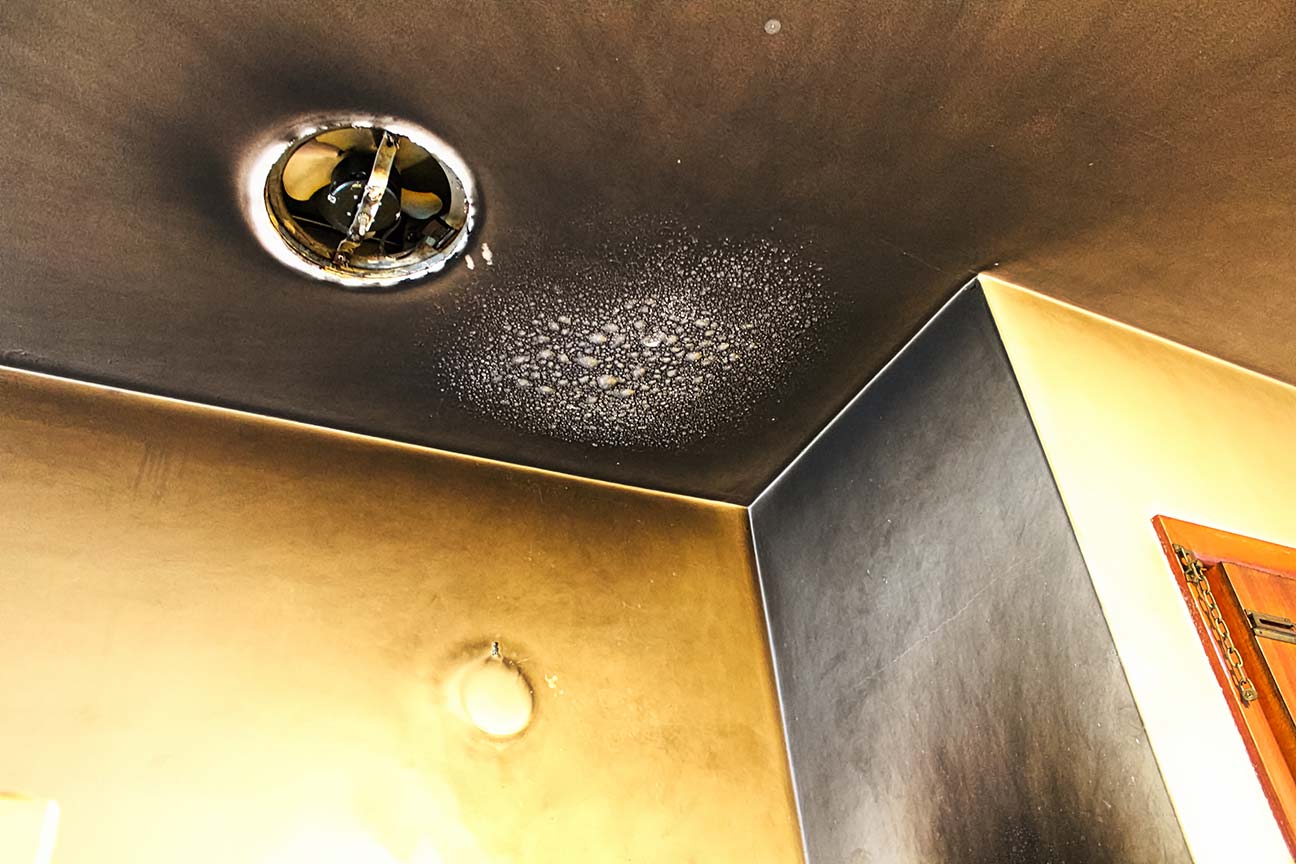
Why Soot Keeps Working After the Fire Stops
Smoke residue is not dust. Combustion produces acidic compounds that settle onto every surface in the building, and they remain chemically active. On metal that means corrosion. On grout, marble, and unfinished wood it means staining that sets permanently. On anything porous — upholstery, carpet, insulation, drywall — the odor compounds keep migrating inward, and the further in they get, the less likely cleaning alone will remove them.
That is why the response clock matters as much here as it does with water. Items that can be cleaned on day one are often replacements by day four, and the difference is rarely visible to the eye at the time.
The Water Damage Nobody Mentions
Putting out a house fire takes a great deal of water, and all of it stays in the building. Suppression water soaks through floors into the assemblies below, saturates insulation, and pools in crawlspaces. In a Colorado mountain home in winter there is a second problem right behind it: the fire almost always takes the heating system out of service, and a structure with no heat and standing water is a structure with frozen pipes coming.
So a fire loss is usually three jobs running at once — smoke and soot, water extraction and structural drying, and protecting a building that can no longer protect itself. Any one handled in isolation tends to make the others worse.
What to Do, In Order
Wait for the fire department to release the structure. Beyond the obvious structural risk, the air inside contains combustion particulates you should not be breathing, and a building can look sound while the floor above is not.
Open the claim the same day. Ask specifically about coverage for temporary accommodation, which most policies include and many people never claim because nobody mentioned it.
Board up openings and tarp the roof. An unsecured property is exposed to weather, animals, and theft — and most policies require the owner to take reasonable steps to prevent further loss. This is usually the first thing we do on arrival.
Extraction and drying start immediately, and in winter temporary heat matters as much as the drying equipment. A fire-damaged building that then freezes has two restoration projects instead of one.
Photograph and video everything in place, and keep a written inventory of damaged contents as you go. Contents claims are where fire losses are most often underpaid, simply because nobody recorded what was there.
"People apologize for calling us the same night. That call is the reason half their contents are still cleanable."
The instinct is to start wiping surfaces down, and it is the single most expensive mistake made after a fire. Wiping dry soot grinds acidic residue into the material and turns a cleanable surface into a permanent stain. Do not use household cleaners on soot, do not run the HVAC system — it will distribute residue through the whole building — and do not plug in or switch on anything that was exposed to smoke or water until it has been checked.
What Not to Touch
- Upholstered furniture, carpets, and clothing — improper cleaning sets odor permanently
- Walls and ceilings, especially painted or wallpapered surfaces
- Any electrical appliance or device exposed to smoke or suppression water
- The HVAC system — leave it off so residue is not pushed through the ductwork
- Food, medication, or cosmetics that were exposed, including sealed containers near the heat
- Anything you intend to claim, until it has been photographed where it sits
What You Can Do
- Open windows to ventilate, if the weather allows and the structure has been cleared
- Photograph and inventory damaged contents, room by room
- Collect important documents, medication, and valuables if it is safe to do so
- Keep every receipt from the moment the fire happened — accommodation, meals, and supplies are often reimbursable
- Write down the names of everyone you speak to and when, including the adjuster
Restoration Services
Heating Season Is Fire Season Up Here
Mountain homes carry fire risk that lower-elevation houses do not, and nearly all of it is seasonal. Woodstoves and fireplaces run hard for months. Chimney flues accumulate creosote. Space heaters come out in rooms the central system does not reach. Dryer vents pack with lint in a long heating season.
Before the season: have the chimney professionally swept and inspected, test every smoke alarm and replace batteries, clear the dryer vent run, keep anything combustible well clear of heaters and stoves, and make sure there is a working extinguisher in the kitchen and near the woodstove. In a rental or second home, put these on the same schedule as the winterization you already do.
Will Insurance Cover It?
Fire damage is covered under standard homeowners policies, including the water damage caused by putting the fire out. The parts people tend to miss are additional living expenses while the home is uninhabitable, and contents coverage — which is usually worth considerably more than owners assume, and which depends entirely on documentation.
We work directly with all major carriers and handle estimates, documentation, and billing as part of the job. You always have the right to choose your own restoration company, whatever your carrier suggests.
Fire or Smoke Damage in Summit County?
Call as soon as the structure is cleared — the first 48 hours decide what can be saved. Emergency board-up, water extraction, temporary heat, soot and odor removal, and full insurance coordination. A live technician answers day or night.