
Summer in Dillon is stunning — warm days on Dillon Reservoir, afternoon thunderstorms rolling in over the peaks, and the kind of mountain weather that changes in minutes. But those same dramatic summer storms that make Dillon beautiful also create one of the most active property damage seasons of the year.
Why Dillon Gets Hit Hard by Summer Storms
Dillon's location at the intersection of multiple mountain drainages makes it one of the most storm-prone communities in Summit County. Situated at 9,066 feet on the south shore of Dillon Reservoir, the town sits in a natural bowl where moisture from multiple directions converges. Afternoon convective thunderstorms build rapidly over the surrounding peaks from late June through August, dropping intense rainfall in very short windows.
Unlike storms on the Front Range that spread their rainfall over larger areas, Dillon's summer storms are highly localized — sometimes dropping an inch of rain in under 30 minutes directly over the town while Silverthorne stays dry. For property owners, this creates a recurring cycle of rapid water events that can overwhelm drainage systems, saturate foundations, and force water into homes that are perfectly fine in every other season.
"Summer storm season in Dillon is one of our busiest times of year. The storms are fast and intense, and the reservoir's proximity means the ground is already holding more moisture than it can manage. Water has nowhere to go but into properties."
The Most Common Types of Summer Storm Damage in Dillon
After 15+ years of responding to storm damage events in Dillon, these are the types of damage we see most frequently during summer storm season:
Saturated ground pushes water against foundations faster than drainage can handle, especially in lower-lying Dillon properties near the reservoir.
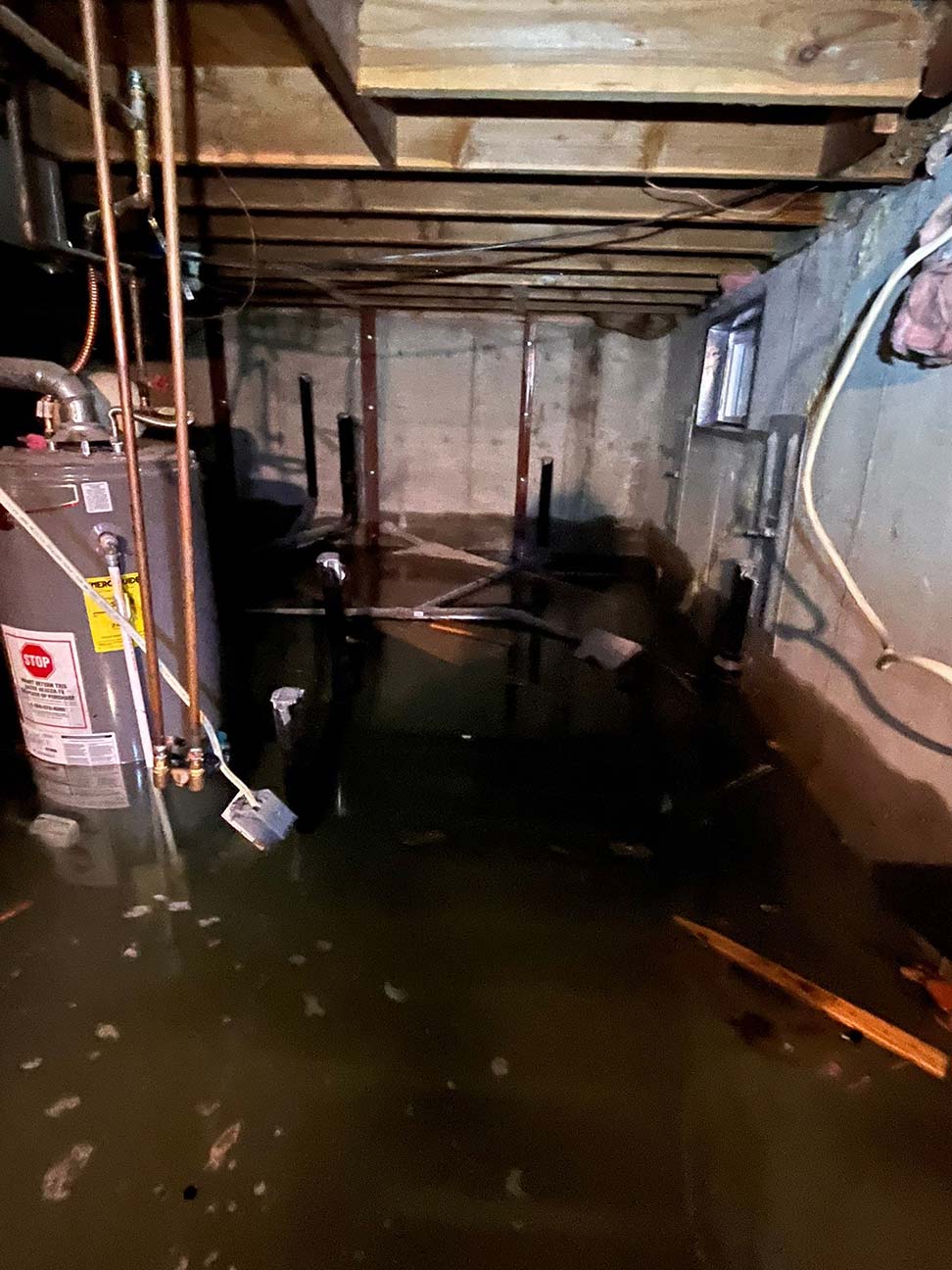
Rapid water accumulation finds its way into below-grade spaces through cracks, window wells, and foundation vents within minutes of a heavy storm.
Gutters clogged with debris from surrounding pines cannot handle sudden intense rainfall, sending water cascading against siding and into wall cavities.
High-velocity wind-driven rain finds aged caulking, failed weatherstripping, and improperly flashed window frames — common in Dillon's older housing stock.
Dillon storms bring hail and high winds that can damage shingles, flashing, and skylights — creating water intrusion pathways that worsen with every subsequent storm.
Summer storms test sump pumps that sat idle all winter. A pump that fails during a heavy storm can result in rapid flooding of below-grade spaces.
The Hidden Danger — Mold After Storm Water Intrusion
The immediate damage from a summer storm is obvious — water on the floor, wet walls, soaked carpet. What most Dillon homeowners underestimate is what happens in the days and weeks after the water appears to dry.
Water that enters walls, subfloors, and crawlspaces during a storm does not simply evaporate on its own. It migrates into building materials and stays trapped, even when the surfaces look and feel dry. In Dillon's summer humidity, this trapped moisture creates ideal conditions for mold growth within 24 to 48 hours. By the time mold becomes visible or detectable by smell, it has typically been growing for weeks.
If your Dillon home took on water during a summer storm, do not assume it dried out on its own. Consumer fans and dehumidifiers cannot reach moisture trapped inside wall cavities and subfloors. Professional moisture meters and thermal imaging are the only way to confirm complete drying — and prevent a mold problem down the road.
What to Do Immediately After a Summer Storm
- Document all visible water damage with photos and video before touching anything
- Identify and address the entry point — blocked gutter, cracked foundation, failed window seal — to prevent the next storm from making it worse
- Remove standing water with a wet vac if it is safe to do so, but do not use regular fans to dry walls
- Call your insurance company to report the claim as soon as possible
- Call On-Site Restoration for professional assessment and drying — we respond within 60 minutes
- Check your crawlspace and basement even if you did not see water upstairs — water often migrates downward invisibly
- Do not enter any space with standing water if there is any electrical risk
Dillon Services
How to Storm-Proof Your Dillon Property Before Summer
The best storm damage mitigation happens before the season starts. Here is what we recommend for Dillon property owners heading into summer storm season:
- Clean gutters and downspouts thoroughly and extend downspouts at least 6 feet from the foundation
- Inspect and reseal caulking around all windows, doors, and exterior penetrations
- Test your sump pump now — pour water into the pit to confirm it activates and drains properly
- Inspect your roof for damaged or missing shingles and failed flashing before storm season
- Grade soil around your foundation so it slopes away — even a slight reverse grade channels water toward your home
- Install window well covers if you have below-grade windows to prevent rapid flooding
- Consider a backup sump pump or battery backup system in case of power outage during a storm
On-Site Restoration — Your Dillon Neighbors
On-Site Restoration is based right here in Dillon. When a summer storm hits your property, we are already close by. We respond within 60 minutes, 24 hours a day, 365 days a year — including the most intense storm nights of summer. We handle emergency water extraction, structural drying, mold assessment, and full insurance coordination from start to finish.
Storm Damage in Your Dillon Home?
We are based right here in Dillon and respond within 60 minutes. Free estimates, 24/7 emergency response, and full insurance coordination.